
Guide
Fire ratings for inflatables: M1, B1, NFPA 701
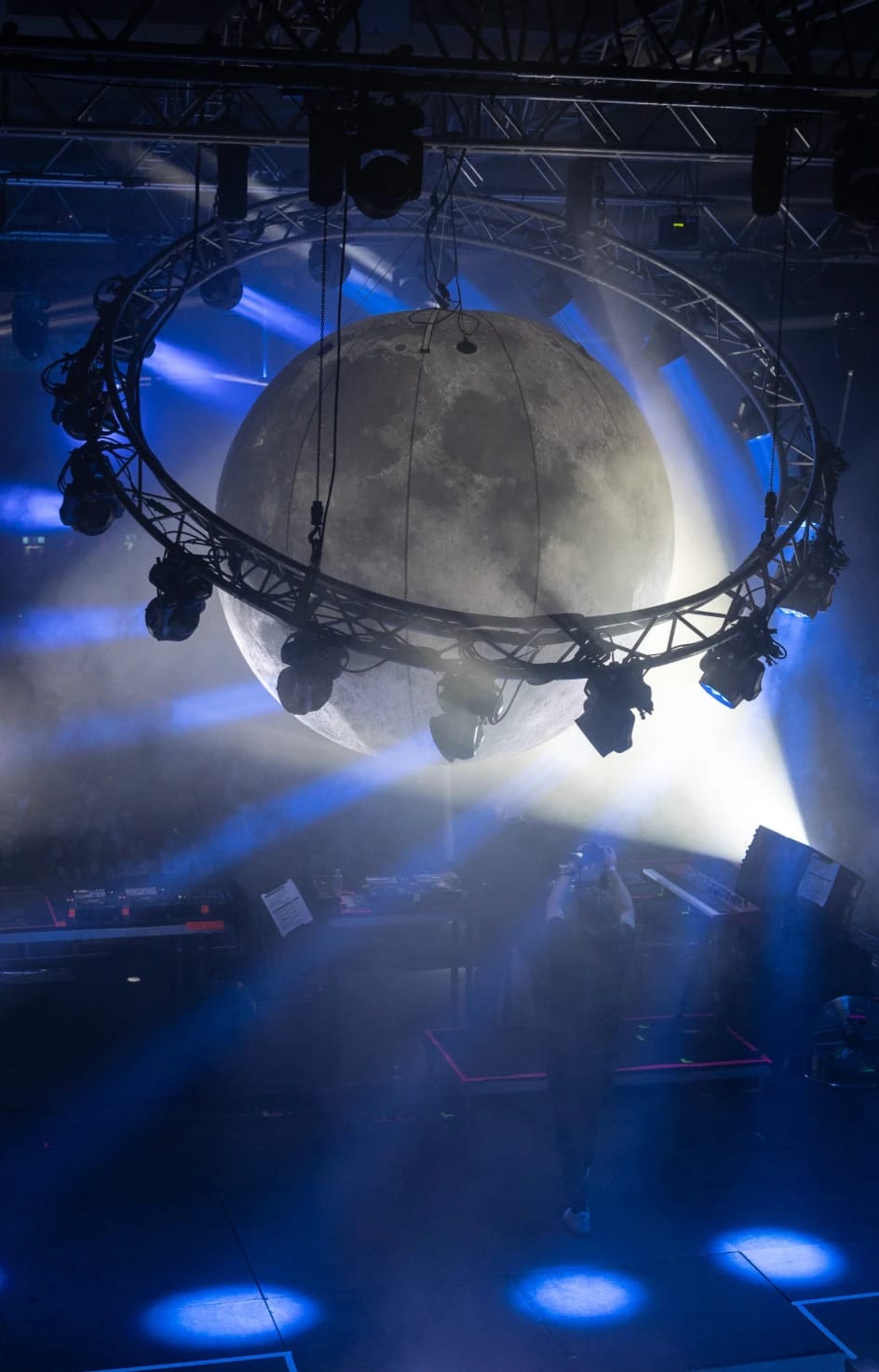
The fire rating an indoor inflatable needs depends on the country: in the United States, fabrics and films are tested under NFPA 701; in France, floating decorations in public buildings must be M1; in Germany, decorations in places of assembly must be at least flame-retardant, class B1 under DIN 4102; in Switzerland, RF2 under AEAI rules. For the Astra Festival, Digital Inflatables delivered a moon with an M1 fire treatment.
Contents · 6 sections
What do NFPA 701, M1, B1 and RF2 mean?
They are fire classifications from different systems: NFPA 701 tests textiles and films in the United States, M1 is a class used in France, B1 a class used in Germany, and RF1 to RF4 are the groups used in Switzerland.
NFPA 701 applies Test Method 1 to materials up to 700 g/m² (21 oz/yd²), such as curtains and single-layer fabrics, and Test Method 2 to materials above 700 g/m², plastic films, fabrics for tents, tarps and banners, and fabrics used for decorative purposes inside a building.
In France, the M classification of NF P92-507 runs from M0, non-combustible, to M4, easily flammable; M1 means non-flammable but combustible, and the report comes from a laboratory approved by the French Ministry of the Interior. In Germany, B1 means schwer entflammbar, or flame-retardant, under DIN 4102.
In Switzerland, AEAI sorts materials into RF1 (no contribution to fire), RF2 (low contribution), RF3 (acceptable contribution) and RF4 (unacceptable contribution); cr flags critical behaviour through smoke or burning droplets. The standard EN 13501-1 grades products from A1 to F, with smoke from s1 to s3 and flaming droplets from d0 to d2.
How do the classes compare?
The AEAI correspondence table puts A1 and A2-s1,d0 in RF1, and classes A2 (except A2-s1,d0), B and C with s1 or s2 and d0 or d1 in RF2.
With s3 or d2, the same classes become RF2 (cr); class D gives RF3, and class F, in RF4, is not allowed as a building material.
In France, the rules for buildings open to the public accept B-s3, d0 or M1 for a ceiling lining, and C-s3, d0 or M2 for a wall lining.
So the match is checked material by material, on the test document for the fabric. An inflatable that tours several countries needs a fabric with a classification accepted in each of them. The guide to inflatable fabrics and printing covers the choice of fabric.
A similar project? Describe it to our team.
Request a quoteWhat do trade fairs, museums and concert halls ask for?
In Switzerland, decorations in rooms open to the public must be RF2, or RF3 (cr) in rooms with sprinklers, with no burning drips, and must not cover exits or signs.

In France, floating decorative elements in public buildings, such as advertising panels over 0.50 m² (5.4 sq ft) or light decorative objects, must be M1 in rooms over 50 m² (538 sq ft) and in exit routes.
In Bavaria, the Places of Assembly Regulation requires decorations that are at least flame-retardant, non-combustible in required corridors and stairwells, and hung at least 2.50 m (8.2 ft) above the floor.
The Astra Festival moon, treated to M1, was used at an indoor electronic music festival in the new hall of Rochexpo. For ceiling height, rigging and emergency exits, see the guide to using inflatables indoors.
What does a valid fire certificate look like?
In France, it is an official M classification report issued by a laboratory approved by the French Ministry of the Interior; a plain test report does not replace it.

The report is valid for five years for the tested product and states how long the classification lasts: unlimited, or limited to 12 months maximum from installation, as for events.
In Switzerland, classification rests on standard tests by accredited testing laboratories. Ask the manufacturer for the document covering the exact fabric delivered.
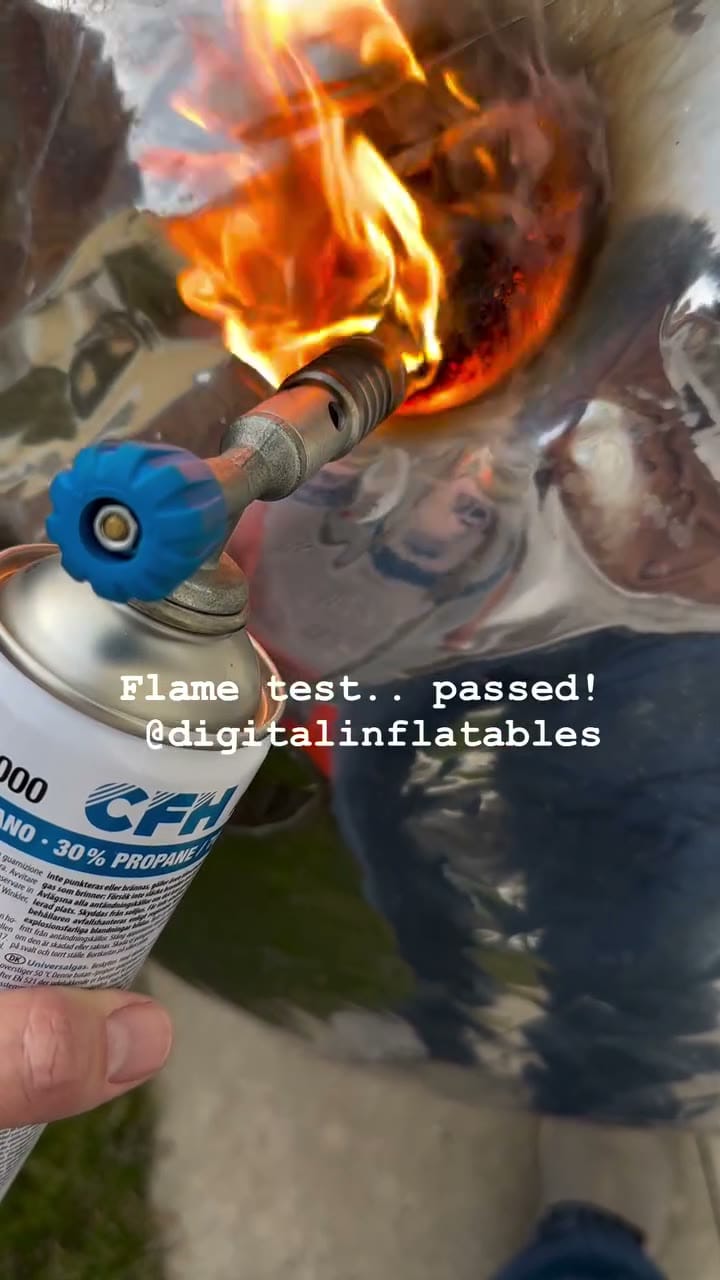
Digital Inflatables has also published a passed flame test on its mirror balloons.
Does a fire-retardant treatment last?
Not always: in France, the report states whether the classification is unlimited or limited in time, and the treatment is checked by an ageing test under NF P92-512.
In Switzerland, AEAI requires that cleaning, painting or use do not alter a material’s fire protection properties to the point that they no longer meet the requirements.
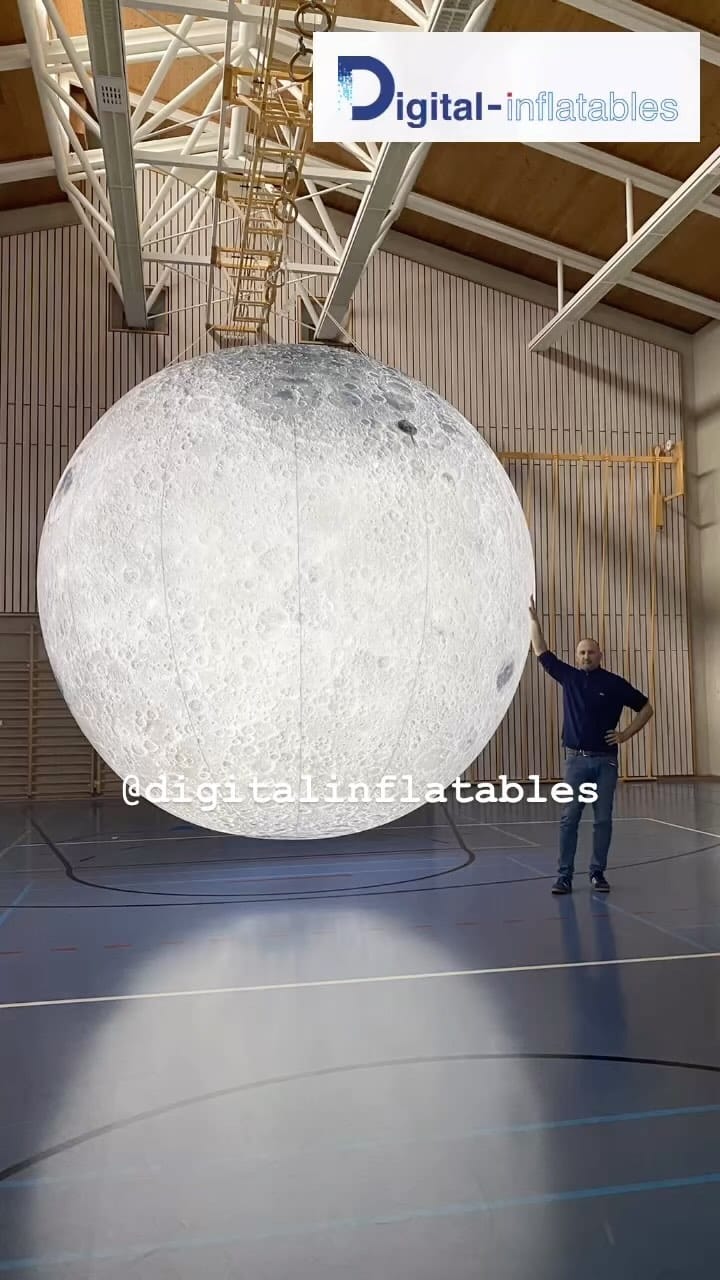
For the WAY agency moons, Digital Inflatables used a fire-retardant fabric lit by a 120-watt LED system.
For the 10 giant heads of the Bubble Experience Museum, each 3.5 metres tall, the workshop chose a certified fire-retardant fabric and a reinforced structure for intensive use.
Does EN 14960 apply to an advertising inflatable?
No: the EN 14960-1 standard covers inflatable play equipment for children fourteen years and under whose primary activities are bouncing and sliding.
It also excludes air-supported buildings. For a decoration, a stage set or a product replica, fire behaviour is judged under the building and decoration rules of the venue.
Full specifications
| Textiles and films in the United States | NFPA 701, Test Method 1 or 2 depending on weight (700 g/m², 21 oz/yd²) |
|---|---|
| Floating decorations in France (ERP) | M1 in rooms over 50 m² (538 sq ft) |
| Decorations in Germany | B1 under DIN 4102, at least flame-retardant |
| Decorations in Switzerland (AEAI) | RF2, or RF3 (cr) in rooms with sprinklers |
| European classes (EN 13501-1) | A1 to F, smoke s1 to s3, flaming droplets d0 to d2 |
| Standard EN 14960 | play equipment for children (bouncing, sliding) |
Frequently asked questions
Can inflatables be used indoors?
Yes, if the fabric has the fire rating the venue requires, for example RF2 for a decoration in Switzerland or M1 for a floating decoration in a public building in France. The Astra Festival moon, treated to M1, was used at an indoor festival.
Is NFPA 701 the same as M1 or B1?
No: NFPA 701 is a test standard used in the United States for textiles and films, M1 a class used in France and B1 a class used in Germany; each is proven with a test document from its own system.
How long is an M1 fire certificate valid?
Five years for the tested product; for events, the classification may be limited to 12 months maximum from installation.
What fire rating do decorations need in Switzerland?
RF2 in rooms open to the public, or RF3 (cr) in rooms with sprinklers, with materials that produce no burning drips.
Does a stage inflatable need a fire-retardant treatment?
Yes, once it goes into a hall open to the public; Digital Inflatables, for example, gave the Astra Festival moon an M1 fire treatment.
Sources
- VKG, fire protection directive on building materials services.vkg.ch
- VKG, fire protection directive on fire prevention services.vkg.ch
- IFTH, rules for textiles in public buildings textile.fr
- Légifrance, fire safety rules for buildings open to the public legifrance.gouv.fr
- City of Griesheim, leaflet on places of assembly griesheim.de
- Gesetze Bayern, places of assembly regulation gesetze-bayern.de
- NFPA, revision of the standard for textiles and films docinfofiles.nfpa.org
- SNV, standard for inflatable play equipment connect.snv.ch
- Digital Inflatables Instagram post instagram.com
- Digital Inflatables projects page digital-inflatables.com
Drafted with AI assistance from the company’s verified facts, reviewed and approved by Jodoc Elmiger, founder and managing director of Digital Inflatables.

